
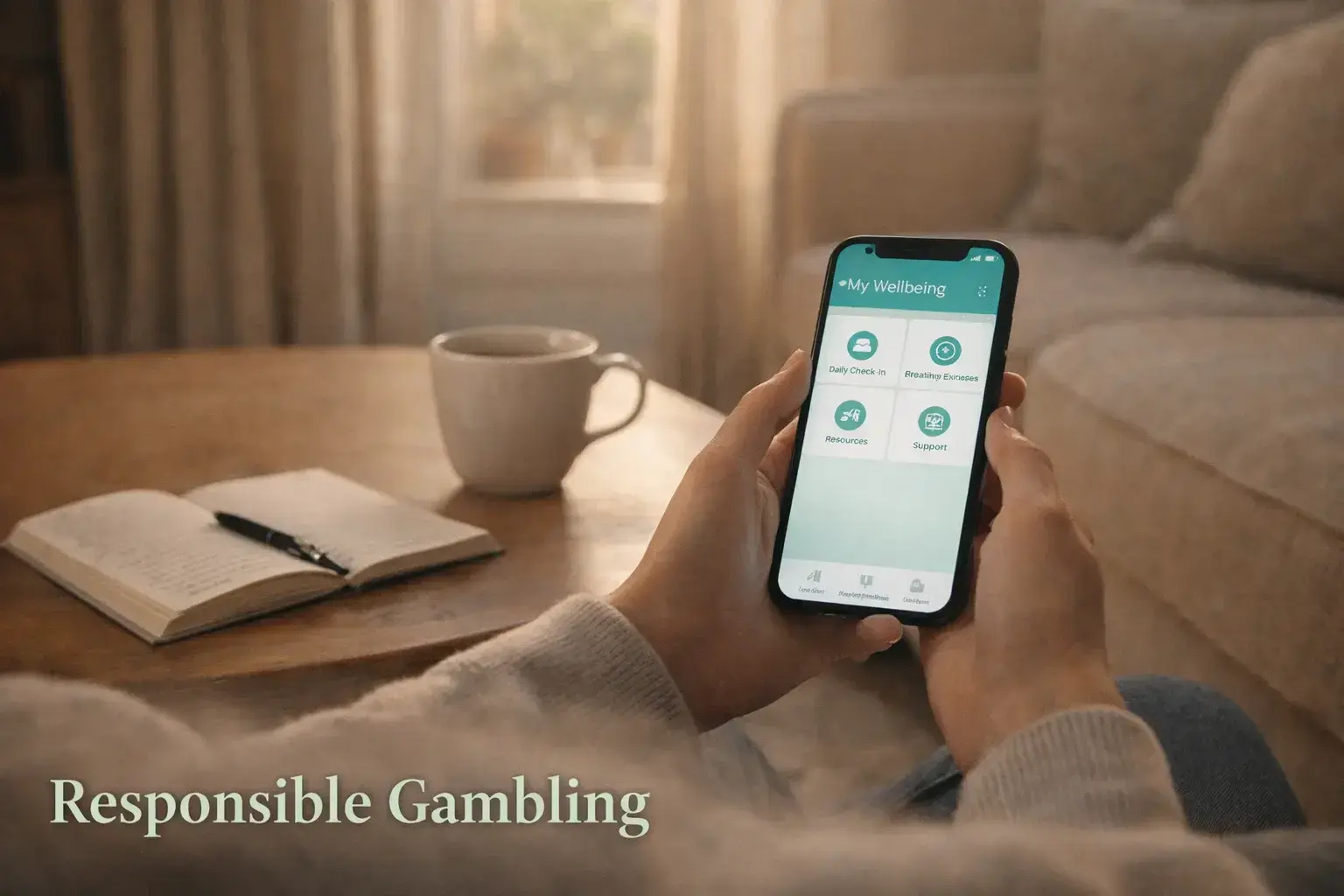
Responsible Gambling Is a Toolkit, Not a Lecture
Responsible gambling in horse racing is not about being told to stop betting. It’s about having access to the tools that keep your betting within boundaries you set for yourself — and knowing where to turn if those boundaries start to slip. The distinction matters because most people who bet on horse racing do so without experiencing harm. But the minority who do face problems deserve clear, practical information, not vague warnings buried in a terms-and-conditions page.
The numbers provide context. The Gambling Commission’s Gambling Survey for Great Britain estimated that 2.7 per cent of adults aged 18 and over scored 8 or above on the Problem Gambling Severity Index in 2024 — a threshold that indicates problematic gambling behaviour. That represents between 1.2 and 1.7 million people. A separate report commissioned by GambleAware found that 5.8 per cent of adults who had gambled in the previous twelve months had a PGSI score of 1 or above, indicating at least some level of risk. These are not abstract statistics — they describe real people, some of whom are reading this page.
Deposit Limits, Reality Checks, and Time-Outs
Every UKGC-licensed bookmaker is required to offer deposit limits. These allow you to set a maximum amount you can deposit into your account over a day, a week, or a month. Once the limit is reached, no further deposits are accepted until the period resets. Setting a deposit limit before you place your first bet is the single most effective pre-commitment tool available — it turns a vague intention to “bet sensibly” into a hard boundary that the system enforces.
From October 2024, all licensed gambling businesses must also prompt customers to set a financial limit before making their first deposit. This is not optional for the operator — it’s a regulatory requirement introduced as part of the reforms flowing from the 2023 gambling White Paper. The prompt doesn’t force you to set a limit, but it ensures you’re given the opportunity to do so at the point where it matters most.
Reality checks are periodic reminders of how long you’ve been gambling and how much you’ve spent during a session. They interrupt the flow of continuous betting — which is the point. A notification that says “You’ve been betting for 60 minutes and have spent £45” introduces a moment of conscious decision-making into an activity that can easily become automatic. Some operators allow you to customise the frequency of these reminders.
Time-outs let you temporarily block yourself from your account for a set period — typically 24 hours, 48 hours, a week, or a month. Unlike self-exclusion, a time-out is short-term and doesn’t involve the broader GAMSTOP system. It’s designed for moments when you recognise that you need a break — perhaps after a losing streak, or when betting is starting to feel compulsive rather than recreational. The cooling-off period can’t be reversed early, which is the whole point: it prevents you from changing your mind in the heat of the moment.
Self-Exclusion and GAMSTOP
Self-exclusion is a more serious step. When you self-exclude from a bookmaker, your account is closed and you’re barred from opening a new one for a minimum period — usually six months. The operator must take reasonable steps to prevent you from gambling with them during the exclusion period, including refusing to accept bets and removing you from marketing communications.
GAMSTOP extends this to all UKGC-licensed online operators simultaneously. By registering with the GAMSTOP scheme, you block yourself from every licensed online gambling site in Great Britain for a chosen period: six months, one year, or five years. It’s a single action that covers the entire regulated market. On-course betting and unlicensed offshore operators are not included, but GAMSTOP captures the vast majority of where online betting takes place.
The registration process is straightforward. You provide your name, date of birth, email address, and postcode — the same details used to verify your identity when opening a betting account. Once registered, the block takes effect within 24 hours. Reversing a GAMSTOP exclusion before the chosen period expires is not possible, and even after expiry, you must actively choose to remove the block. The system is deliberately designed to make re-entering gambling a conscious, considered decision rather than an impulsive one.
Recognising Problematic Patterns
Problem gambling rarely announces itself with a single dramatic event. It develops through patterns — gradual shifts in behaviour that are easy to rationalise individually but collectively signal a loss of control. Recognising these patterns early is far more effective than waiting for a crisis.
Chasing losses is the most common warning sign. After a losing day, the urge to place another bet to recover the money can be overwhelming. The logic always sounds reasonable in the moment: one more bet, at slightly higher stakes, will get you back to even. In practice, chasing losses accelerates them. The decisions made in pursuit of recovery are typically worse — more impulsive, less analytical — than the decisions that preceded the loss.
Betting with money you can’t afford to lose is another clear indicator. If your gambling stake comes from funds earmarked for rent, bills, or essential spending, the boundary between recreation and harm has already been crossed. Similarly, borrowing money to gamble — whether from credit cards, friends, or family — signals that your betting has outgrown your budget.
Emotional changes around gambling also deserve attention. Irritability when you can’t bet, secrecy about how much you’re spending, neglecting work or relationships to follow racing — these are behavioural shifts that people close to you may notice before you do. Being honest with yourself about these patterns is difficult, which is why external support exists.
Where to Get Help: GambleAware and the National Gambling Helpline
GambleAware is the leading charity in Great Britain focused on gambling harm. It funds treatment, research, and prevention programmes, and its website provides information on recognising problem gambling, self-assessment tools, and direct links to support services. The National Gambling Helpline, operated by GambleAware, is available around the clock by phone, live chat, and email. It provides confidential advice and can refer you to local treatment services.
The NHS also offers treatment for gambling problems through specialist clinics, including the National Problem Gambling Clinic in London and regional services across England. Treatment is free at the point of access and available through self-referral or GP referral.
Gordon Moody is a charity that provides residential treatment for people with severe gambling problems. Its programmes last several weeks and offer a structured environment away from gambling triggers. It also runs online group therapy sessions for those who can’t attend in person.
None of these services require you to have reached a point of total crisis before you make contact. If your gambling has started to feel less like entertainment and more like obligation, that alone is a sufficient reason to reach out. The tools described in this article — deposit limits, reality checks, time-outs, self-exclusion, GAMSTOP — exist to prevent harm before it deepens. The support services exist for when prevention isn’t enough. Both are there for the same reason: because betting on horse racing should remain something you choose to do, not something you feel compelled to do.