 Available in US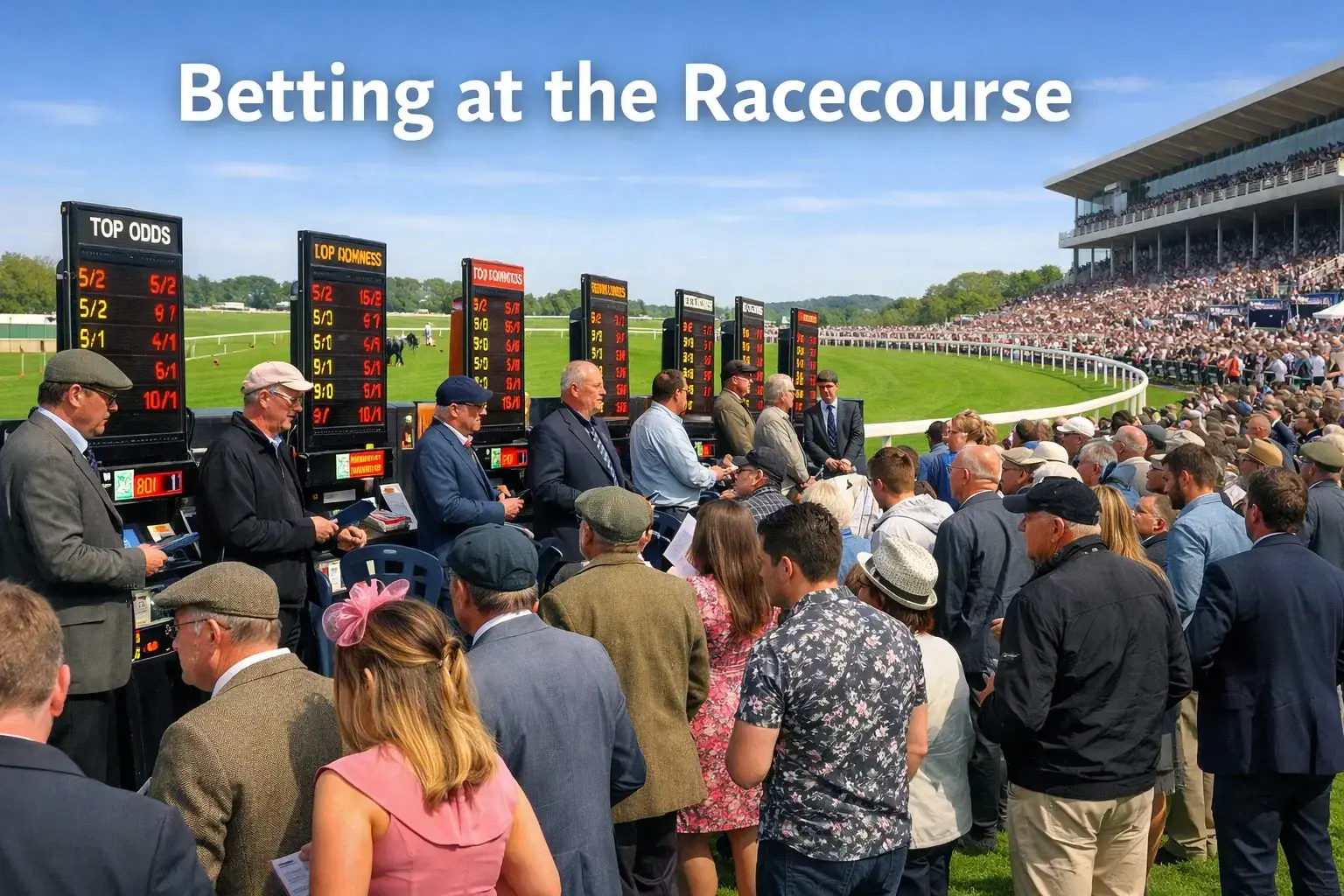
Racecourse Betting Blends Tradition with Technology
Betting at the racecourse is an experience that has no online equivalent. You can study form for weeks on a screen, but standing in the ring, watching the bookmakers adjust their boards, hearing the crowd react to a market move, and sizing up the horses in the parade ring before committing your money — that is a different kind of decision-making. It’s tactile, immediate, and informed by visual cues that no app can replicate.
The on-course betting ecosystem has three components: the bookmaker ring, the Tote, and your own phone. Each operates differently, each has advantages in particular situations, and knowing how to bet on horse racing at the racecourse means understanding when to use which. Over 5 million people attended British racecourses in 2025, the first time that figure had been exceeded since 2019, and the Racecourse Association reported that attendance among under-18s rose 17 per cent — a sign that racecourse-going is attracting a younger demographic alongside its traditional audience. Many of those visitors will be betting for the first time. This is what they need to know.
The Bookmaker Ring — Picking a Price Face to Face
The bookmaker ring is the row of licensed bookmakers who set up boards displaying their prices for each race. This is the oldest form of horse race betting in Britain, predating the Tote by over a century, and it’s still the primary way to bet on course at most meetings.
Walking the ring takes a minute but can save you money. Different bookmakers display different prices on the same horse. One might have your selection at 7/1 while another across the ring is showing 6/1. These differences exist because each bookmaker is managing their own book — their exposure to each outcome — and they adjust prices to balance their liabilities. A horse that’s been heavily backed with one bookmaker might be shorter there but still available at a longer price with another who hasn’t taken the same volume of bets.
To bet, approach the bookmaker whose price you want, state the horse’s number (not its name — numbers avoid confusion), your stake, and the type of bet. “Number five, ten pounds to win” is all you need to say. The bookmaker hands you a physical ticket, which you keep until the race has been run and the result confirmed. Cash is the standard medium, though some on-course bookmakers now accept card payments.
Prices in the ring are live and can change at any moment. A bookmaker who is showing 8/1 when you walk up might rub that off and replace it with 7/1 as you open your mouth. This is normal. If you want to be sure of getting the displayed price, be decisive. Hesitation in the ring is a pricing opportunity for the bookmaker, not for you.
One particular advantage of ring betting is that you can sometimes negotiate a price, especially with independent on-course bookmakers on quieter days or for larger stakes. This is rare at major festivals where volumes are high and margins tight, but at midweek fixtures it’s not uncommon for a bookmaker to offer a slightly better price to attract a reasonable stake. It’s an interaction that simply doesn’t exist online.
Using the Parade Ring to Assess Runners
The parade ring is where the horses walk before being saddled and mounted. It exists partly for tradition, partly for practical reasons (owners and trainers meet here), and partly to give racegoers a chance to see the runners in the flesh. For bettors, it’s an information source that form cards can’t deliver.
What you’re looking for is signs of wellbeing and readiness. A horse that walks calmly, with a shining coat and an alert expression, is typically in good physical condition. One that’s sweating profusely, fidgeting, or showing the whites of its eyes may be anxious or unwell. Neither observation guarantees the outcome — plenty of sweating horses have won big races — but they add a data point that desk-based punters don’t have access to.
Experienced racegoers also watch how a horse moves. A smooth, fluid walk suggests soundness. A short, choppy stride might indicate stiffness or discomfort. Trainers occasionally withdraw horses after the parade if they’re unhappy with how the horse has moved on the day, and what you see in the ring is what prompted that decision.
The parade ring is also where you can gauge connections’ body language. A trainer and jockey in animated, confident discussion are signalling something different from a pair standing quietly with folded arms. These are not infallible indicators — racing people are professionals who manage their expressions — but across a day of racing, the parade ring gives you repeated opportunities to calibrate your instincts against the information on the card.
Wi-Fi and App Betting at the Course
Modern racecourses provide Wi-Fi specifically to enable racegoers to bet through their online accounts while attending in person. This creates a hybrid approach: you can study the parade ring, assess the going, and then place your bet at the best available price across multiple bookmakers — not just the ones standing in front of you.
App betting at the course also gives you access to features that on-course bookmakers and the Tote don’t offer, including Best Odds Guaranteed, enhanced place terms, cash-out options, and live streaming of races at other meetings. If you’re at Ascot but want to back a horse at Haydock, your phone is the only practical route.
The downside is connectivity. On busy days at major festivals, the sheer volume of people using the Wi-Fi and mobile networks can slow things to a crawl. Placing a bet in the final seconds before the off becomes risky when your app takes twenty seconds to load. Experienced course-goers hedge against this by placing their main bets ten to fifteen minutes before the race, using the final few minutes for any adjustments through the ring or Tote if needed.
Collecting Winnings and the “Weighed In” Call
On course, there is an essential protocol between the race finishing and your winnings becoming official. After the horses cross the line, the jockeys return to the weighing room and are weighed with their saddles and kit. This confirms that each horse carried the correct weight during the race. Until the announcement “Weighed In” is made over the public address system, the result is not official and bookmakers are not obliged to pay out.
In rare cases, a stewards’ enquiry can alter the result between the finish and the Weighed In call. A horse that crossed the line first might be disqualified for interference, promoting the second-placed horse to the win. If you’ve already collected from a bookmaker on the original result, you may need to return those winnings — though in practice, many bookmakers absorb the loss on small bets rather than chasing customers through the crowd.
Once Weighed In is confirmed, return to the bookmaker who took your bet and present your ticket. They’ll verify it, calculate your return, and pay you in cash. If you bet with the Tote, collect at the nearest Tote window with your ticket. Tote dividends are displayed on the results boards and announced over the PA system.
The one piece of advice that every regular racegoer will give you: don’t throw away your ticket until the result is final. A crumpled slip in a pocket can be smoothed out and presented for payment. A crumpled slip in a bin cannot. The margin between a good day and a frustrating one at the races is sometimes nothing more than a square of card with the right number on it.
Betting at the Racecourse — More on this topic at betting on horse racing.
See also Horse Racing Accumulator Bets.
